lunedì 28 ottobre 2013

Henri Cartier Bresson: the eye of the century comes to Lucca.


Looking for something to do next weekend?

Until 3 November, the Lucca Center of Contemporary Art (Lu.C.C.A) hosts “Henri Cartier Bresson: Photographer”, a fascinating exhibition that may not rival the Uffizi’s for size or grandeur but which displays an important collection of photographs by the 20th Century’s original and greatest photojournalist.


The black and white photographs provide a contrast to the wealth of earlier artwork that we see so much of in Florence and are displayed elegantly on two floors of this small museum in north-east Lucca. Cartier Bresson’s photographs, taken with his beloved Leica camera, document the landmark events of his century through the people that experienced them (Ghandi’s funeral, George VI’s coronation and the days leading up to the Cultural Revolution in China, to name but a few).

Take his photograph Berlin Wall from 1963. Yes, it records a historical period, but the viewer’s attention is drawn to the three men standing on what appears to be a post box, looking over the barrier. At a first glance the position of these men recalls child-like curiosity and determination to “see what’s on the other side”; prior to reading its caption, the work appears almost whimsical. Then, one realizes that the objects in photograph and the subject it depicts are physically much larger and far more significant than kids peeping over the garden wall.

This mix of the playful and the hard-hitting seems to characterize much of Cartier-Bresson’s oeuvre, which often does depict children and captures its subjects in movement, whether in France, Russia, China, Mexico, Italy, Spain, India or America. However, the principal characteristic of these photographs is the beauty of their composition… Cartier-Bresson trained as an artist and every image is taken at the perfect moment, at the perfect angle, to capture a perfectly balanced frame. All of this in spite of the fact that, as a street photographer, little of his work was “set up”.


If you can’t make it before the exhibition closes, Lucca is still well worth a weekend visit for its own sake; the old centre is a lovely maze of old buildings, squares and tiny streets, pasticcerie and beautiful churches. So far, so like Florence? Perhaps, excepting the enormous walls that surround the old town, which are topped by a wide, tree-lined path and simply beg you to hire a bike and go for a leisurely cycle. There is also the fascinating Piazza dell’Anfiteatro which conserves the shape of the old Roman amphitheatre but is now full of little cafes and shops (FYI, Top Gear once begun a challenge there!). Puccini was also born in Lucca, and its Duomo is considered spectacular.

A bus costing less than 15 euros (return) runs from Florence to Lucca regularly from Via Fiume (near S.M.N station) and takes a little over an hour.

For more information on the exhibition, see http://www.luccamuseum.com/HCB.php

- Sophia Dzwig, Intern at the BIF

giovedì 24 ottobre 2013

Artisan Lessons in Florentine Techniques. A Sculptural Experience at the British Institute of Florence and the Accademia Arte San Giovanni Firenze.


Last month a visitor to the British Institute, Nathalie Arbel, received a hands-on experience in a variety of Renaissance and modern art techniques.  Nathalie’s lessons were situated at the centre of Firenze’s artisan quarter, enabling her to become fully immersed in Florence’s contemporary art scene. 


Nathalie's lessons were orientated around specific artistic methods ranging from egg tempera, fresco painting, water gilding and ceramics technology to clay and marble sculpture.  These diverse art forms were practiced under the instruction of professional artists, Dr. Alan Pascuzzi, Lauro Pepiciello, Fabrizio Lucchesi and Luca Viviani.


Nathalie's unique Florentine experience allowed her to engage with techniques utilised by modern and Renaissance masters.  As you can see, the results of her artistic experiments were particularly impressive!


For those wishing to replicate Nathalie’s experience, the British Institute offers private sculpture lessons taught by Alan Pascuzzi.  As stated on the BIF website, the duration of the course will be tailored to suit the requirements of the individual.  Other courses undertaken by Nathalie can be found at the Accademia Arte San Giovanni Firenze.


For more information visit the link below,

- Ellie Porter HOA intern

martedì 22 ottobre 2013

Restaurants, Café's and Rooftop Bars! Eating and Drinking in Firenze.

Like the rest of Italy Florence is known for its excellent food and drink.  It is certainly hard to go wrong amidst the abundance of café's, bars and restaurants dispersed along each and every street.  Whether you're searching for a lunchtime panini or an afternoon espresso, the high standards of Florence will leave you impressed (and satisfied!).

To truly immerse yourself in Florentine culture, a good appetite is essential.  As the social heart of the city, Osteria's and Trattoria's provide great opportunities to mingle with locals and experience Florence from an Italian perspective.  Here you will find lively atmospheres perfect for practicing language skills  and experimenting with authentic Tuscan cuisine!

Below I have compiled some recommendations for eating, drinking and relaxing, all of which have been tried and tested (over an extended period of time!).  Whilst there are plenty of hidden gems yet to discover, these are the most memorable places I have so far encountered.
Gustapizza 
Via Maggio, 46r


Situated beside Santo Spirito, this pizzeria is almost constantly busy...and for good reason too!  Alongside daily specials, Gustapizza offers a small selection of well-priced pizza's with a 'Marinara' amounting to a very reasonable $4.50 (although keep in mind pizza is the only option!).  Gustapizza attracts a varied crowd of both tourists and students creating a buzzing, if not hectic, atmosphere.  All pizza's arrive quickly and can be taken away or eaten in depending on your mood.  Gustapizzas' are certainly the most memorable I am yet to encounter in Florence.
Il Latini
Via dei Palchetti, 6r


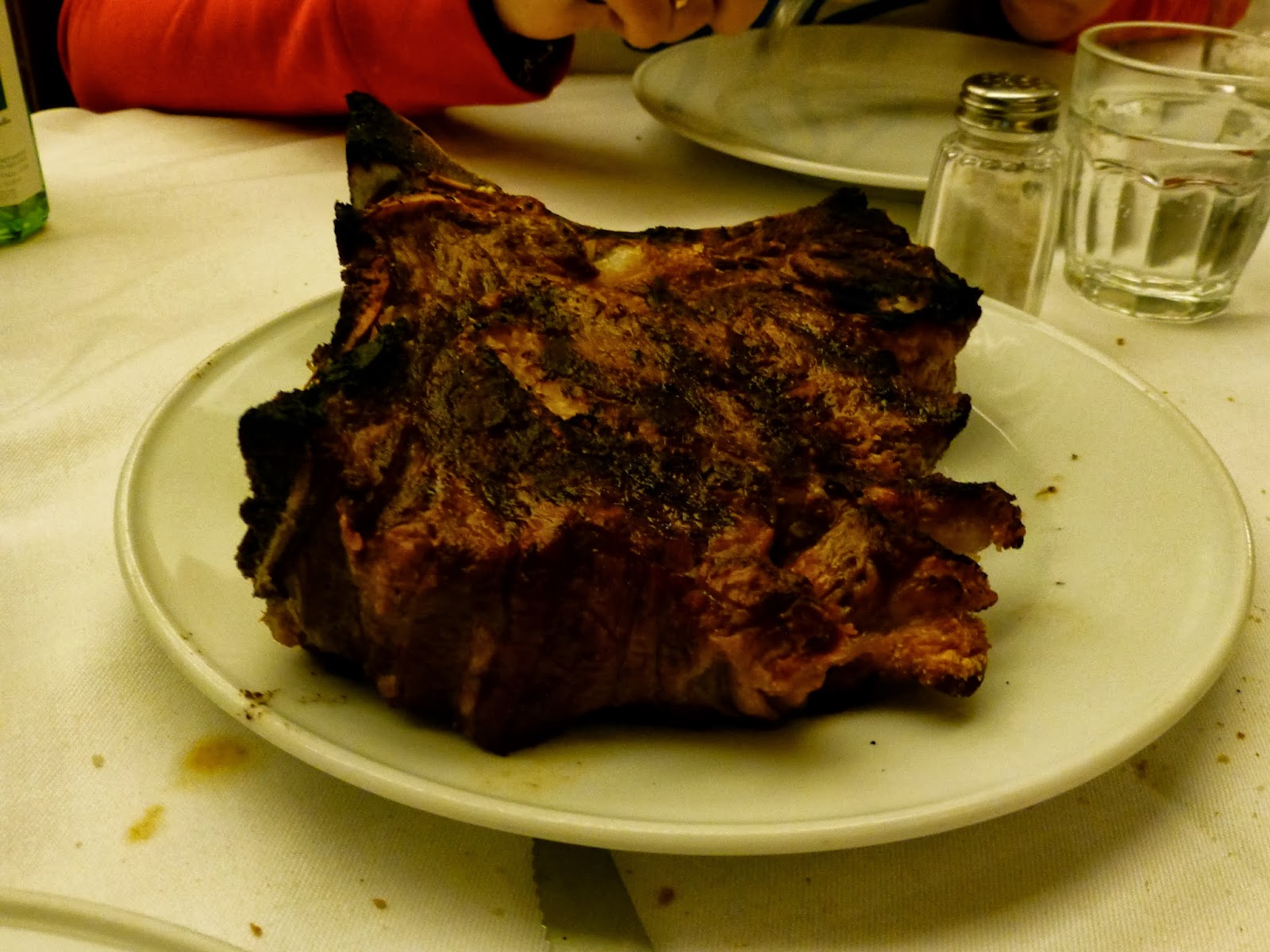
Arguably, Il Latini offers the best steak in Florence.  If not the best, certainly the most generous!  This is a restaurant for big appetites and carnivores.  There is no menu and your bill will be estimated by an extremely theatrical waiter at the end of the meal (remember each course is optional!).  Whilst certainly not on the light side, the food at Il Latini is superb and will be enjoyed in a fun, laid-back environment.  If Henry VIII or Cosimo de' Medici happens to be one of your alter egos, this is the banquet hall for you!

Soul Kitchen
Via de' Benci, 34r


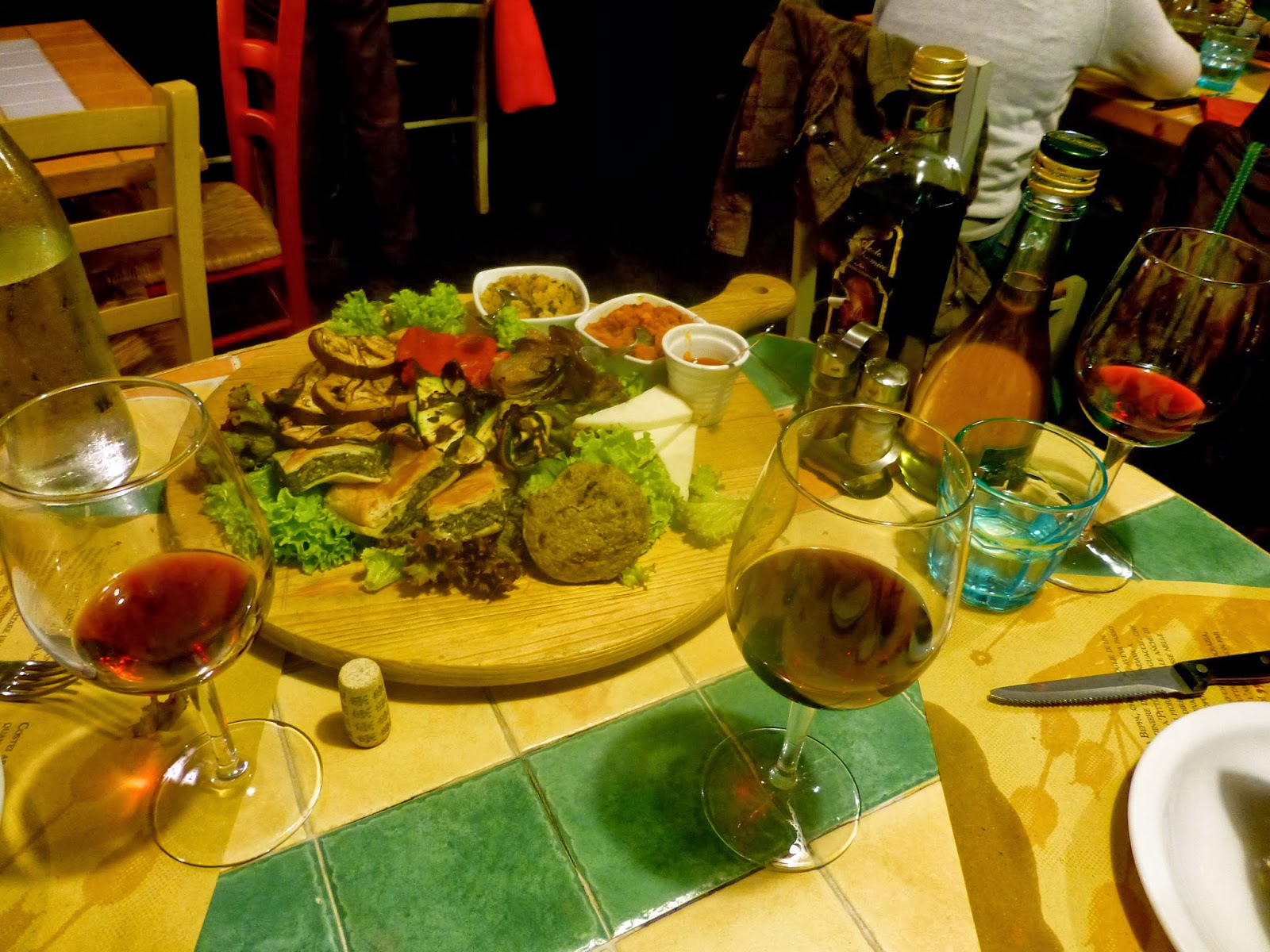
Have you ever questioned why aperitivo is only popular in Italy?  After sampling the food at Soul Kitchen I certainly have!  Not only is this bar/restaurant cheap, it also offers a delicious variety of aperitivo suitable for vegetarians and meat-eaters.  All you need is a drink and you are free to fill up (and re-fill) your plate with as much food as you please.

Trattoria 4 Leoni
Via de Vellutini, 1r


Trattoria 4 Leoni is one of my favourite restaurants in Florence or possibly the world! Simply the smell of this restaurant is enough to make your mouth water!  It is not a place you would naturally stumble upon but is nevertheless extremely popular and requires booking in order to secure a table.  Whilst the portions are small, the prices are reasonable and you will find yourself savouring every mouthful.  I recommend the pear and gorgonzola tortellini... or the steak, or the tuna, or the tiramisú.  Whatever you choose you won't go wrong!
L'Art Bar
Via del Moro, 4r


In my opinion, this vibrant bar serves the best cocktails in Florence.  During happy hour, which is from 7 to 9 pm, drinks are on average $6 and afterwards $9.  They are delicious and evidently made with much love and care by a true expert.  There are only ten tables in this small bar, so it's a good idea to arrive early in a small group.

Teatro del Sale
Via de Macci, 118


Teatro del Sale is one event not to be missed!  In order to attend this ten course feast you must become a member of the Teatro and be sure to book in order to avoid disappointment.  The rules of membership, which you will be offered at the restaurant's main desk, provide a quirky introduction to the Teatro del Sale experience.  With requirements that involve socialising, sharing and (rather strangely) respecting other's silence, it is not hard to imagine the kind of elaborate evening offered here.  Taking place in a hall opposite a stage, there is no set seating and you are encouraged to sit beside friendly strangers.

Each course is announced by an eccentric waiter followed by a collective round of applause. Wine is unlimited and the food is extremely varied offering pasta, seafood, meat and soup.  Some of these courses were traditional whilst others are slightly miscellaneous, particularly for those who are not culinary experts!  Desert and coffee is served in front of a preforming blues band - the perfect way to end a meal.  As my friend and I were warned before embarking on the Teatro del Sale feast... pace yourself, or you won't make it to the end!
Westin Excelsior
Piazza Ognissanti, 3


Whilst on the more expensive side, the 6th floor bar at the Westin Excelsior hotel offers spectacular views of Florence and great quality cocktails. 

Coquinarius
Via delle Oche, 15r


Note di Vino
Via Ghibellina


Positioned opposite Santa Croce, the cheese, meat and crostini boards offered at this small wine bar make for a tasty and not-too-heavy midday meal.  Attracting mainly Italians, these shared lunches are great for social gatherings in a picturesque and busy location.

La Beppa Fioraia
Via dell'Erta Canina, 6r


Cuculia - Liberia con Cucina
Via Dei Serragli 3r


Situated close to the British Institute library, this café offers a varied selection of herbal teas, cakes and other edible treats.  There is also free wifi and an interesting selection of art books and contemporary novels for a spot of lunchtime browsing!  Cuculia is a relaxed, friendly place offering an ideal environment to simply sit back, unwind and watch the world go by.

- Ellie Porter HOA Intern

And another review of 'La Maremma' located on Via Guiseppe Verdi 16r by Calum Trenaman, a student on the Italian and Early Renaissance course.

'Don't be fooled by the average looking facade of La Maremma.  The inside of this quaint restaurant is quite the little gem, without even mentioning the food.  A small place, where reservations are not mandatory but highly recommended, the staff could not be more friendly.  Our bottle of water was 5 minutes forgotten so we were given it for free!  The food, although in quite small portions, is delicious.  I went with 2 friends and we all thought our respective meals were exquisite.  We were salivating at other tables' meals as well after finishing.  Do not miss this place while you're in Florence.'

domenica 13 ottobre 2013

Biennale Internazionale Dell'Antiquariato Di Firenze 2013

From the 5th to the 13th October the annual Antiques Biennale took place in the Palazzo Corsini.  This is an important and much anticipated event in the art world, demonstrating a variety of objets d’art from all over Italy and other parts of Europe and America.  Not only does this event provide an almost unparalleled opportunity to get up close and personal with works spanning from the Etruscan period to the 20th century, it also allows access to a Palazzo scarcely open to public viewing.


The Palazzo Corsini staircase with a sculpture of
Pope Clementi XII in the central niche.

The second floor of the exhibition.

Having been lucky enough to watch a performance of Romeo and Juliet in the Corsini gardens last summer (which runs every May!) I was itching to get inside and see what the Biennale had to offer.  Whilst most of the stunning objects on display were a little out of my price range, the exhibition proved to be consistently stimulating, appealing as much to the potential buyer as it did to the art history student!

This studded leather case with four blown glass bottles is
attributed to late eighteenth century Venice and valued
at $8,000!

To observe an interior space usually off limits added an exciting dimension to the Biennale, creating a sense of adventure and making the experience additionally stimulating for the viewer.  The grand frescoed ceilings and baroque décor of the Palazzo Corsini acted as a spectacle in its own right.  Presented in union rather than competition with the antiques fair below, it would be unjust to label the Palazzo’s decorative features a simple backdrop.


The Palazzo Corsini grotto.  At the centre of this image is a fountain
surrounded by allegorical figures and ethereal frescoes.

Separated between two floors with a half way balcony café overlooking the Arno, the exhibition compiled an extensive collection of antiques.  These were displayed in individual rooms divided by company, operating much like an art historical maze and never failing to incite intrigue!  The Palazzo is not small and neither were the quantity of objects on display, yet little stamina is required to appreciate the superb quality of each and every one of them.  
This tiny sculpture was fashioned from the
bone of a rhinoceros.  It was certainly one of the more
unusual objects I encountered!

Many of the antiques were objects of historical and cultural importance and were selected by a panel of experts.  By the time you reach the last room you will be disappointed it's all over! 

One of the many open rooms in the Palazzo Corsini.

The following images represent some of the works I found most interesting at the Antiques Biennale, but these are only a few examples of the art, objects and furniture on display.


This marble sculpture entitled 'Madonna dolente' or 'Sorrowful Madonna' dates to the eighth or ninth decade of the 14th century and is of Lombardian origin.  The sculptor is Bonino da Campione (born in 1357 and died in 1392/93).  What is immediately striking about this sculpture is the aged, almost grotesque features of the Madonna, such as the deep wrinkles on the forehead and the drooping skin around the cheeks.  Whilst this enhances the emotional intensity of the Madonna, it also contrasts to idyllic depictions regularly seen in fresco and egg tempera works.  Eternal youth appears not, however, to be the central focus of this prayer-piece but rather the suffering of Christ - the cause of the Madonna's lamentation.  The viewer is, in turn, encouraged to participate in this mourning and contemplate the reality of Christ's sacrifice.

A detail of the sculpture and how it connects to the 
simplistic wooden niche.  One of the perks of the 
exhibition was the potential to view objects from 
specific angles.

The most unique aspect of the Biennale experience was the opportunity to observe art works in minute detail without the restriction of ropes or perspex cases.  Viewing pieces from such a close distance is certainly a revealing exercise.  It draws emphasis on features and techniques impossible to acknowledge from afar, encouraging a greater understanding of the artist, the style and the subject. 

Filippo Vitale, Sisara e Giaele, 1589/1590-1650, oil on canvas, Naples from
an exhibition room entitled 'Napule è... mille culure' curated by Nicola Spinosa.

A detail of Giaele's gruesome end.

A detail from Jacomart, The Crucifixion, 1411/1412-1461, tempera on panel,
Valencia.  The intricate stamps on the gold leaf can be clearly identified on
the halo's as well as the distraught expressions of the figures.

A detail from 'The Crucifixion' showing the lilies sprouting from
the pools of blood which fell after the death of Christ.  The
significance of these lilies relate to the Florentine fleur-de-lis.

The staff members and experts working at the Biennale were also extremely friendly and informative.  They were more than happy to answer my questions and direct me to helpful bibliographical sources whilst letting me take as many photographs as I pleased!

The rare object displayed above is a cornice made of wood and bone from around 500 AD.  It is attributed to an Italian workshop and, according to the current owner, is potentially of Etruscan origin.  The central roundel of the cornice would have once contained a cameo.  It is valued at around $3,000. 

Francesco Bertos, The Expulsion from Paradise, early 18th 
century,  marble, Italy.  This innovative sculpture is part of 
a group of 'Expulsions'.  Another similar object by the same 
sculptor can be found in the Victoria and Albert museum, 
London.

A detail from 'The Expulsion from Paradise'.

There were art objects to satisfy all tastes and preferences with traditional functions ranging from decorative to religious.  Below are some examples of the eclectic mix and diversity of works on display.

Two Bronze Candelabra's, 1825, chased, gilded and
carved, mother of pearl, Vienna.

Jewellery by Jasmine Carbone from l'Oreficeria Contemporanea a Firenze.

Inkstand, 19th century, mother of pearl, engraved and gilded
bronze, France.

Whilst they variate stylistically, each object possesses an individual history having journeyed from the hands of the maker(s) to those of the connoisseur.  It is rewarding to acknowledge our position as 21st century extras in the continuing storyline of these works simply through our observations and willingness to appreciate!

It costs $10 euros to visit the Biennale on weekends and during weekdays students at the British Institute receive a 50% discount.  

Specialist art publications by Art&Libri were also on sale at the Biennale.  This book store is located close to the British Institute library on Via dei Fossi and is certainly worth a visit!


Overall the Antiques Biennale was an inspiring and memorable occasion.  It is the ideal event for both art lovers and historians, as well as those hoping to make a unique investment.

- Ellie Porter HOA intern